Synthetic Indices Robot A Simple Guide for New Traders
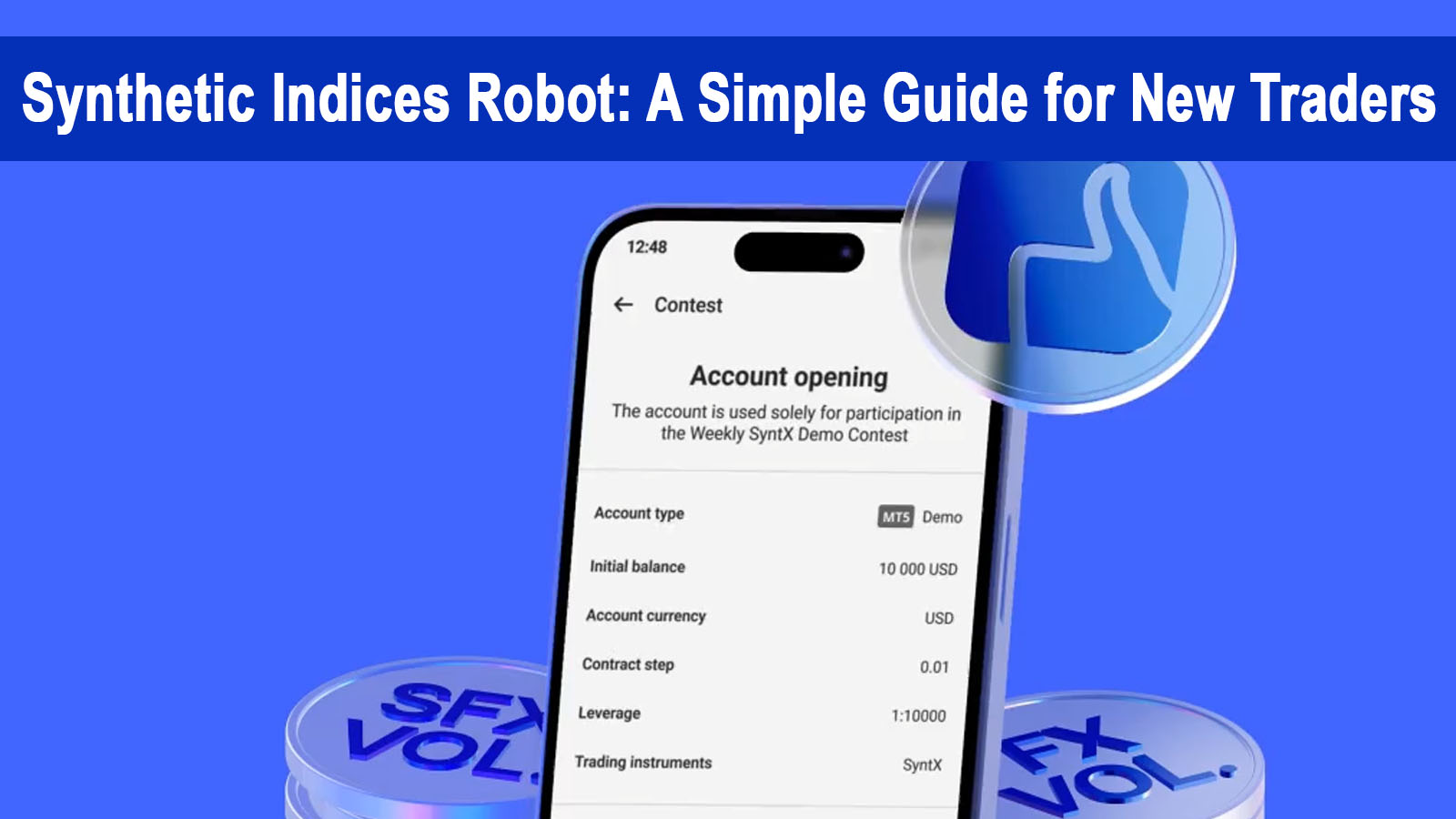
Gone are the days when you had to stare at your screen watching charts all day to find the perfect opportunity to trade. A synthetic indices robot just makes everything easier.
It automates the entire process, executing trades based on rules you’ve already set, without needing you glued to a chart every hour.
Whether you’ve got a full-time job, kids running around, or just don’t want to stare at charts all day, a synthetic indices robot handles most work while you go do other things.
This guide gets into everything a beginner actually needs to know before using one, covering platform setup, risk, common mistakes, and how you actually build consistency over time.
What This Actually Means for Beginners
A synthetic indices robot is a program that trades synthetic markets for you, following rules you set instead of trading yourself.
For beginners, this means you can get into these markets without needing years of experience since the synthetic indices robot handles execution automatically once it’s set up right.
Think of it like instructions you write once, and the robot just follows them trade after trade, no getting tired, no getting emotional, and none of the things that affect human decisions.
This consistency is the biggest edge over manual trading, especially if you haven’t built the discipline yet to actually follow your own rules under pressure.
Choosing the Right Platform to Start on
Not every platform handles automated trading the same way, so this step matters far more than beginners think going in.
The Weltrade MT4 and MT5 platforms give you what you actually need to run a synthetic indices robot properly. It provides you with access to Expert Advisors (EAs) and the synthetic instruments these robots are built for.
Without the right platform behind it, even a well-built synthetic indices robot can run into delayed execution or just not have access to the markets it needs.
It’s important that you also spend some time testing your platform’s reliability before committing to anything over the long term since execution speed and uptime affect how closely your live results end up matching what you saw while testing.
Setting up Your First Trade
Getting your first automated trade set up right helps you avoid confusion, and it sets the tone for how well your robot performs going forward. Below are four things worth understanding before you turn anything on.
- Choose your instrument – Choose which synthetic market your synthetic indices robot trades since different instruments have different volatility levels, tick speeds, and price behavior, which all shape results.
- Decide your position size – Set how much of your account each trade risks; keep this small while you’re still figuring out how the robot actually performs under real conditions.
- Set an entry point – Define what conditions your robot uses to enter a trade whether they are price levels, indicators, or some mix of both.
- Add a stop-loss point – Every automated trade needs a built-in exit, protecting your account if the market moves hard against whatever the robot’s logic predicted.
Understanding Risk Before You Begin
Automation doesn’t get rid of risk; it just changes how that risk gets handled. A synthetic indices robot still needs clear risk rules since a poorly set up robot can lose money just as fast as a careless manual trader, sometimes faster given how quickly automated systems fire off trades.
Setting a max daily loss limit and checking your synthetic indices robot settings regularly catches problems before they become real account damage.
A lot of beginners assume automation automatically means safer trading, but honestly, the opposite can be true if the rules underneath aren’t good. A robot executes a bad strategy just as consistently as it executes a good one.
How Volatility Levels Affect Your Trades
Synthetic markets come in different volatility levels, and this directly changes how your synthetic indices robot actually performs.
A robot built for calmer markets might struggle with high volatility, while one tuned for aggressive movement could overreact in slower markets; therefore, matching the robot to the right instrument actually matters here.
On top of that, testing across different volatility levels during demos gives you a much clearer picture of where your setup performs best instead of just assuming one setup works everywhere.
Common Mistakes New Traders Make with a Synthetic Indices Robot
Most beginners make the same mistakes when they start using automation, and once you know what these mistakes look like, you can avoid them before they cost you money. Here are four mistakes to watch out for early on.
- Trading without a plan – Turning on a synthetic indices robot without clear goals or rules leads to results all over the place that you can’t actually learn from.
- Ignoring risk management – Skipping stop losses or risking too much per trade turns a manageable loss into a real account problem fast, sometimes within just a few trades.
- Chasing losses – After a bad trade, it’s tempting to try and win the money back right away. This usually leads to even bigger losses because decisions made out of frustration replace the careful planning you’d normally follow.
- Overtrading early on – Running several robots or strategies at once before understanding even one properly just creates confusion instead of consistency.
Practicing Before Going Live
A demo account is still the safest place to test your synthetic indices robot first. Run it there for a few weeks, and you’ll see how it actually performs, not how you hoped it would perform.
Watch how it handles calm markets and then watch how it handles the rough ones too because a robot that only works when things are quiet isn’t much of a robot at all.
Building Consistency over Time
A synthetic indices robot works best when you resist the urge to keep messing with its settings after every small loss. Checking performance weekly, instead of reacting to every single trade, helps you distinguish real problems from normal market noise any synthetic indices EA deals with sometimes.
Give your strategy enough time to actually prove itself across dozens of trades before deciding it needs changing; judging performance from a few trades rarely gives you an accurate read on how the robot really performs over time.
Conclusion
A synthetic indices robot can genuinely make trading simpler, but it’s not a magic fix. Set it up right, manage risk properly, and give it time.
A synthetic indices EA can genuinely work in your favor when you avoid the mistakes most beginners rush into. Furthermore, build consistency slowly, and automation becomes a real advantage.